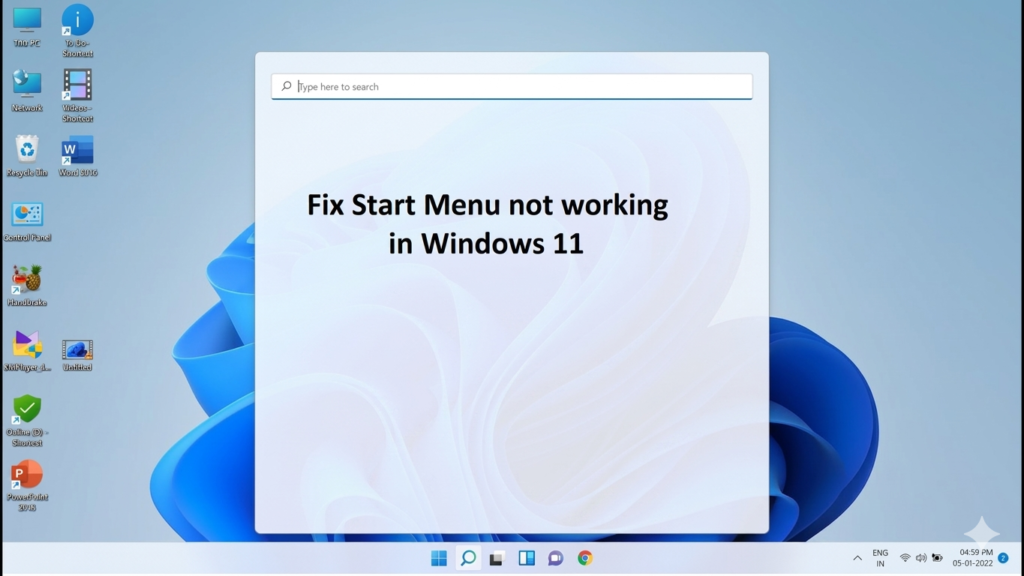
The Start Menu in Windows 11 is one of the most important parts of your PC. It is your main control center. You use it to open apps, search files, and access settings in seconds.
When it works smoothly, everything feels fast and easy. But when it stops working, even simple tasks become hard. The Start Menu may not open. Sometimes it freezes. Sometimes it reacts very slowly.
This problem can feel frustrating because it blocks your normal work. You click the Start button, but nothing happens.
So the real question is simple: what should you do when the Start button stops responding?
Why Start Menu Stops Working ?
Temporary system glitch
- Windows 11 can face small bugs
- These bugs appear suddenly without warning
- Start Menu may freeze for a short time
- Restart usually fixes the issue quickly
Explorer or Start process crash
- Start Menu depends on Windows Explorer
- If Explorer crashes, Start Menu stops working
- Click on Start but nothing opens
- System may also lag for a few seconds
Corrupted system files
- Windows system files control Start Menu
- If files get damaged, problems start
- This can happen after sudden shutdowns
- Start Menu may not open or keep freezing
Bad or recent Windows update
- New updates in Windows 11 can have bugs
- These bugs affect Start Menu performance
- Start Menu may become slow or unresponsive
- Microsoft usually fixes this in later updates
Heavy system load
- Too many apps running at once slow the system
- CPU and RAM get overloaded
- Start Menu may lag or freeze
- This is common in low-end PCs
Quick Fixes
Restart your PC
Restarting your PC is the easiest fix for Start Menu issues in Windows 11. It clears small system bugs and refreshes everything.
Many times, the Start Menu stops working because Windows gets stuck for a moment. A restart gives your system a fresh start and fixes most simple errors.
Key Points
- Fixes temporary system bugs
- Refreshes all Windows processes
- Fast and simple solution
- No technical steps needed
Example
You click the Start button, but nothing opens. You restart your PC. After restart, the Start Menu works normally again.
Restart Windows Explorer
Windows Explorer controls your desktop, taskbar, and Start Menu. If it crashes, the Start Menu can freeze or stop responding.
Restarting it refreshes the interface without restarting the full system. This is a quick and effective fix for UI problems.
Key Points
- Refreshes Start Menu and taskbar
- Fixes frozen interface
- No full restart needed
- Fast system refresh method
Example
You are using your PC and suddenly the Start Menu stops responding. You restart Windows Explorer from Task Manager. The Start Menu starts working again instantly.
Check keyboard Start key
Sometimes the problem is not in Windows but in your keyboard. The Windows key may stop working due to hardware issues or driver glitches.
Checking it helps you understand where the real problem is. You can also test the Start Menu using your mouse.
Key Points
- Checks hardware vs software issue
- Windows key may be faulty
- Mouse Start button helps testing
- Simple diagnostic step
Example
You press the Windows key, but nothing happens. Then you click the Start button with your mouse. It opens normally, showing the keyboard key is the issue.
Close heavy apps
When too many apps run together, your system becomes slow. RAM and CPU get overloaded. This can make the Start Menu lag, freeze, or stop working. Closing unused apps helps your system run smoothly again.
Key Points
- Reduces CPU and RAM usage
- Prevents system overload
- Improves system speed
- Fixes lag-related issues
Example
You are running a game, many browser tabs, and editing software at the same time. Your system becomes slow, and the Start Menu stops responding until you close some apps.
System Fixes (Main Solutions)
Run SFC scan
The SFC scan is a built-in tool in Windows 11. It checks your system files and fixes damaged or missing files. These files are important for running core features like the Start Menu. When they break, the Start Menu may stop working or become unstable.
Key Points
- Scans and repairs system files
- Fixes missing or corrupted files
- Built-in Windows tool
- Safe and easy to use
Example
You run the SFC scan and wait for it to finish. After restart, the Start Menu starts working again because broken files were repaired.
Run DISM repair tool
DISM is a deeper repair tool than SFC. It fixes the Windows system image itself. If the system image is damaged, simple tools cannot fully repair it. DISM helps restore system stability and fix hidden issues affecting the Start Menu.
Key Points
- Repairs Windows system image
- Fixes deeper corruption issues
- Works when SFC is not enough
- Improves system stability
Example
SFC does not fix the issue. You run the DISM tool next. After it completes, the Start Menu starts responding normally again.
Re-register Start Menu apps
Sometimes Start Menu apps become unregistered or broken. Re-registering rebuilds the Start Menu components in Windows 11. This helps restore missing or broken system app connections.
Key Points
- Rebuilds Start Menu system apps
- Fixes broken app links
- Restores missing components
- Strong software-level fix
Example
The Start Menu is not opening properly. You re-register the system apps. After that, the Start Menu works again without errors.
Restart Start process
The Start Menu runs through a background process called StartMenuExperienceHost. If this process freezes, the Start Menu stops responding. Restarting it refreshes the Start Menu instantly without affecting the whole system.
Key Points
- Restarts Start Menu process only
- Fixes frozen or stuck Start Menu
- No full system restart needed
- Quick and effective fix
Example
Your Start Menu is stuck and not opening. You restart the StartMenuExperienceHost process. The Start Menu starts working again immediately.
Update and System Repair
Check Windows Update
- Install latest updates in Windows 11
- Fixes known bugs and system errors
- Improves system stability and performance
- Often resolves Start Menu issues automatically
Example
You open Windows Update and install pending updates. After restart, the Start Menu starts working properly again.
Uninstall recent update
- Useful if problem started after a new update
- Removes buggy or unstable updates
- Helps restore previous working system state
- Good rollback option for troubleshooting
Example
After a recent update, Start Menu stops working. You uninstall that update, restart the PC, and the issue is gone.
Update drivers
- Keeps system hardware working smoothly
- Graphics drivers especially affect UI performance
- Fixes lag, freezing, and display issues
- Improves overall Windows responsiveness
Example
Your system feels slow and the Start Menu freezes. After updating the graphics driver, everything becomes smooth again.
User Profile Fix
Create a new user account
A user profile in Windows 11 stores all your settings, files, and system preferences. Sometimes this profile gets damaged. When that happens, the Start Menu can stop working or behave in a strange way. Creating a new user account helps you check if the issue is only in your old profile.
Why it works
- Old user profile may become corrupted over time
- Broken settings can affect Start Menu function
- New profile starts with default clean settings
- Removes hidden configuration errors
- Separates system issue from user profile issue
Example
Your old account has a broken Start Menu. You switch to a new account, and everything works normally again.
Prevention Tips
- Keep Windows 11 updated to get latest fixes and better stability
- Avoid unknown software and only install trusted apps to prevent system issues
- Restart your PC regularly to clear bugs and refresh system performance
- Limit startup apps so your system does not slow down during boot
- Keep your system clean by removing unused apps and temporary files
Conclusion
Fixing the Start Menu in Windows 11 is usually simple if you follow the right steps. Start with basic fixes like restarting your PC or Windows Explorer. These steps solve most common issues. If the problem stays, move to system fixes like SFC scan, DISM tool, or re-registering Start Menu components.
Only use advanced options like user profile repair or system restore if nothing else works.Most issues are temporary and easy to fix, so there is no need to worry. Try each step one by one and see what works for your system.
So, which fix worked for you?
FAQs
How do I stop it from happening again?
Keep Windows 11 updated, avoid heavy startup apps, and restart your PC regularly. Also, do not install unknown or unsafe software.
Does low RAM cause this issue?
Yes. Low RAM can overload the system. When memory is full, the Start Menu may become slow or stop responding.
Can antivirus affect Start Menu?
Yes, sometimes antivirus software can slow down or block system processes. This can cause Start Menu lag or freezing.
Why does new user account fix it?
Because the old user profile may be corrupted. A new account creates a fresh and clean profile, which often fixes Start Menu issues.
Is SFC scan safe?
Yes. The SFC scan is a safe built-in tool. It only checks and repairs system files. It does not harm your data or apps.
Do I need to reinstall Windows?
No, in most cases you do not need a full reinstall. Simple fixes like restart, SFC scan, or DISM tool usually solve the problem.
Can updates cause this issue?
Yes. Sometimes a new Windows update brings bugs that affect the Start Menu. Most of these issues get fixed in later updates.
Why does Start Menu stop working suddenly?
This usually happens due to small system glitches, corrupted files, or overloaded system resources in Windows 11. It can also happen when Windows Explorer crashes or freezes.